Building new Canals in England
Introduction: The water situation in the UK
According to the Met Office, the average annual precipitation averages for the entire UK are 133 days of rain or snow, totaling 885 millimeters, 33.7 inches from 1981 to 2010, (Met 2021) whereas reported by the National center for environmental information, California has average annual precipitation totals from 1981 to 2010 is 515 millimeters. (NOAA 2021) There are more than 300 millimeters of total rainfall difference between the UK and California. Despite all stereotypes of rich water resources from rainfall all year round, similar to California, the wrong timing of the rainfall is what causes the problem of UK water scarcity. Droughts and floods are frequent events recurring in the UK. Along with continuing expanding population leads to increasing amounts of water demand and climate change, the situation is expected to worsen in the future. Drought and water scarcity could have far-reaching consequences, such as disruptions in public water delivery, agriculture water shortages, industrial crises, and thermal power plant cooling water deficiencies. Effective and sustainable water resource management became major components of water governance. ‘Our indications show that as many as one-in-five of our surface waters are over-abstracted,’ according to the recently published UK ‘25 Year Environment Plan’ (HM Government 2018, p. 68). The study highlights the need of ensuring long-term water resources for future generations, acknowledging that this will include both decreasing demand and increasing supply.
Building canals and managing natural rivers would provide multiple benefits that can secure the country’s future, for example, irrigation, domestic water use, industrial, and a broad range of ecological services. To quench its thirst in. In 2014, an idea that would provide the answer to the UK water issue came after Mr. Johnson championed/ He proposed that solving this water shortage requires building a vast canal between the UK and Scotland. This proposal, designed by one of the world biggest design firms – Aecom, and the project estimated to cost a total £14 billion waterway that will stretch from the Scottish Borders down to Newcastle and Leeds, making its way along the west coast of England and taking in more water along the way, finally delivering to homes and businesses. The Scottish government expressed support for the concept of creating a canal to alleviate the water shortage at the time. But due to the increasing population and series of climate concerns and financial feasibility, this project is no longer supported by the country’s situation, the minister of Scotland now has made it clear that plans are now pie in the sky.
While in England, water scarcity is a major problem that must be addressed, with many industries and businesses promising to reduce leakage by 50% by 2050. Some experts have expressed concerns that it may be too late by that time. The Environment Agency of England had planned to build new reservoirs to provide a sufficient supply, while others think that alternative solutions are required and needed. There are now hundreds of canals, about 4,700 miles (7,600 km) of navigable canals and rivers throughout the United Kingdom; 2,700 miles (4,345 km) of these are part of the connected system. If we could find the best way to connect these already existing canals, it would boost the efficiency of water delivery across the UK.
There are many benefits we can receive from the canal project if it is built.
- To begin with, irrigation water and domestic water use delivered by canals are widely accepted and widespread in the UK. This way sufficient amounts of water can be delivered yearlong with sufficient water during the growing season, ensuring crop production.
- On the other hand, through canal irrigation, economic development can be expedited by avoiding dangerous droughts. Dependence on rainfall can be minimized through canal development.
- Canal irrigation can be served both as a water reservoir and used for water transport (this is what makes it different from simply water reservoir) They are pretty much multi-purpose where apart from irrigation, hydro-electricity generation, barges and vessels transportation, drinking water supply, and fishery development is also supported by canals.
- Canals are also becoming a source of a tourist attraction these days.
- Groundwater level does not go down on account of canal irrigation, but on the contrary water level increases, which facilitates digging of wells.
- Canal system is a permanent structure, hence only maintenance is required for getting its benefits for a long time.
- Canal irrigation may be used to grow more vegetation besides crops, it can serve as a source to maintain wetland and support country conservation strategies for wetland-dependent wild animals, and increase the amount of biomass in the region.
Leeds Liverpool canals in the UK provides a great example demonstrating how a canal can create a range of benefits that serves the public and the ecological environment. Leeds and Liverpool’s canal is known as the longest canal built-in history in the United Kingdoms. The length of the canal is 127 miles (204km), consisting of a total of 91 locks on the mainline of the canal, without counting the locks on its five branches. The construction of the canal took nearly 50 years and eventually opened in 1816. The canal departs from Liverpool and then travels through East Lancashire before passing through Pennines on the outskirts of the Yorkshire Dales before arriving in Leeds. The Leeds & Liverpool Canal is a wide canal that allows Yorkshire keels to pass across the Pennines. The canal also allowed access to export channels to African and American markets via Liverpool, as well as a coal supply from Wigan to Liverpool. In old days, the canal was majorly used to carry cotton, coal, wool, and limestone, etc through the sharply growing industrial cities between Lancashire and Yorkshire. Ever since the world wars, road traffic, and railways traffic increased, the traditional canal side industries decreased. Despite that, the Leeds & Liverpool canal still serves as a heaven place for wild lives, a beautiful place for tourism after centuries. The opening of the Leeds and Liverpool canal had improved and encouraged the development of the textile industries in Lancashire and West Yorkshire. For over decades, they have supported Britain’s economic development, they deserve to be called the most historically significant canal in the country. When it comes to man-made canals that help cargo on its journey around the world, there are only two that comes to people’s mind: the Panama Canal and the Suez Canal. The former provides the shortest route for barges and large shops, saving them from undertaking a costly and time-consuming land journey. The latter saves a trip around the whole of the African continent and means that the cargo doesn’t have to pass through dozens of countries to get from Asia to Europe.
Up until this point, we have looked at 3 massive, archaic water projects that are still serving the world today. the country. From the Panama Canal built that benefits world trade to the Leeds & Liverpool canal that benefits the country, we see the common things these waterways all share, they provide alternatives for the road traffic, they support cargo transit that is much more efficient at a less expense. Compared to much on-road traffic, canals and waterways are more environmentally benign.
Canals are important to us because they serve as an oasis to many wild animals, they can solve the problem of water scarcity, and provide water for domestic, industry, and agriculture. They can also provide short ways for tons of cargo to be transported between regions and regions, enhancing global trade.
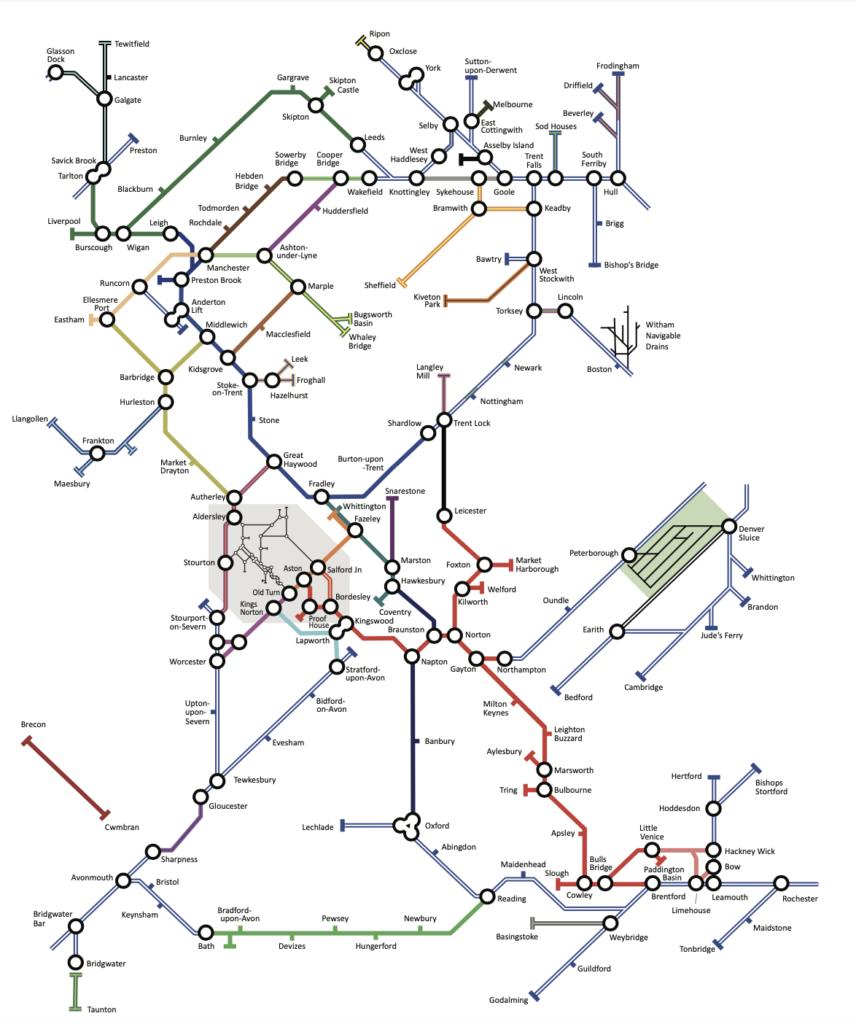
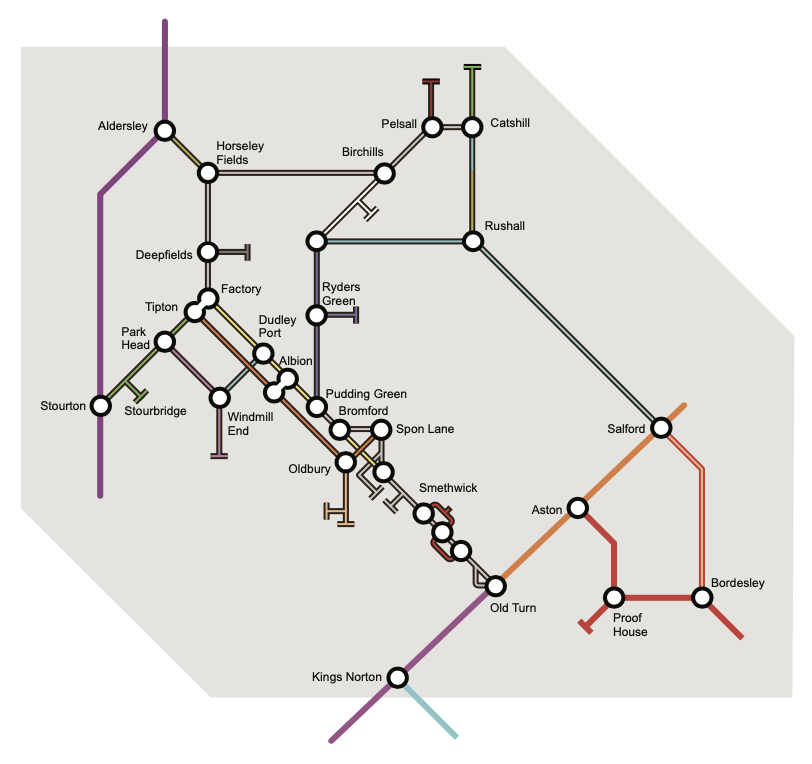
Where is it going?
As previously stated, there are hundreds of canals that already being built in the UK. There are about total of 7,600 km of navigable canals and rivers throughout the nation, but 4,345 km of these are part of the connected system. Today’s task is to find ways (and alternative ways too) to connect these already existing canals, therefore to achieve the maximum water delivery efficiency across the UK
Most popular trading center – London
Whenever people talk about London, first thing jumps to mind is Prosperity. London city, along with New York undoubtedly holds the position of a World financial capital, with global reach and recognition.
In terms of being an established international trading center, the London market is both highly competitive and very mature. As it did in other places, Commerce thrived in the city, attracting merchants and entrepreneurs from all around. London’s population grew from 50,000-60,000 in the 1520s to a million by the end of the 18th century. According to historical demographer Tony Wrigley, 8,000 immigrants arrived each year between 1650 and 1750. These merchants formed guilds and held considerable power and influence. They were able to secure autonomy and special freedoms and rights for the residents that businesses in the area enjoy to this day. (D’SOUZA 2019) Also, as one of the world’s most important commercial and financial hubs, London’s economic area is critical to the UK’s stability, accounting for a significant portion of the country’s tax income.
There are many canals around London could provide excellent opportunities for barges and vessels around the city to have cargos delivered through inland waterways to their destinations. However, inland waterways transport has not been utilized in London to any significant degree for half a century. The most famous river, the Thames River. It is England’s longest river and the second longest river in the United Kingdom. The river has been an important trade and transport route. London’s fame and fortune is due its river. Regardless of its long history, it helped London became one of the most developed cities in the world, but there is difference between rivers and canals. A a river is the work of nature, they are naturally occurring and often have its own velocity(current) and a canal is a channel for water made by men. The former existing mainly contribute to the environment and provide ecological services whereas the latter usually have been made for the purpose of carrying goods by boats and ships from one place to another.
This paper deals with an interconnection of canals especially for London, that will allow the barge to be maximized in size in order to make to most benefits, thus versatile in the market. And allow various cargo to be dropped off along the way in any city.
Before plan, here are things needed to pay attention:
- What type of effect will post on the nearby residents? Noise and air pollution?
- Will the construction of canal cause unrecoverable ecological destruction?
- Elevation? Locks?
- Would the Constuction involve relocating people from nearby project site?
- Wild animals in water and on land.
- Would the construction cause water contamination?
- Fianacial feasibility?
- Engineering viability
Route 1: Hertford to Cambridge.
According to the map above that around the London there are several canals that are already interconnected. If we desire to further build another canal as extension. I think a new canal between Hertford to Cambridge would give the shortest route for water transportation while achieving the goal of maximize the length and interconnected.
Total estimated length between Hertford to Cambridge: ~30 miles
If we compare the projected canal to railway transport, the train journey time between these two cities is around 1 hour and 17 minutes, covers around 40 miles. The total carbon emissions are 3 kg CO2 according to online source. On the other hand, based on our previously research, there are many studies have concluded that water transportation using vessels and barges through canals are way more economical in its use of energy per ton-mile transported than either rail or truck, consuming significantly less fuel to do the same job.
Route 2: Port of Immingham
Immingham Docks is the common name for this port, which is one of the major ports on the East Coast. Back in 2012, it was the largest port in the United Kingdom. It is still the port in the UK with the highest tonnage capacity, carrying 55 million tons of goods each year. This port is critical in supporting the IK’s supply chain, which ensures the country’s long-term power generation. This is due to the fact that the port connects the Humber, which is often regarded as the UK’s energy estuary, to the rest of the country. The Port of Immingham handles 10 million tons of coal and 20 million tons of oil, making it the country’s primary energy port. Because the port is less than 24 hours distant from these markets, its Ro-Ro services serve the Scandanavian, Northern European, and Baltic markets. According to the map, the port of Immingham is closest to Immingham to Lincoln.
Total estimated length from Immingham to Lincoln: ~30 miles
In comparison to the proposed canal, the train trip time between Immingham and Lincoln is about 2h 36m and covers a distance of around 53 miles. In most cases, the quickest travel takes 1h 35m. Every travel resulted in a total carbon footprint of 5 kg CO2. This served as a reminder that water transportation through barges and boats is more environmentally friendly, emits less carbons pollutions. Based on prior research, many studies have suggested that water transportation has a modest influence on air quality, Water transport emits considerably less pollution than trucks and is equivalent to, or less than, rail, depending on topography, route, and other factors.
Route 3: connecting the River Ouse in Bedford to the Grand Union Canal in Milton Keynes
If this canal successfully built, it will interconnect the whole East Anglia region to the 2,000-mile network, and would become a tourist attraction in its own right. It will also have to pass around the 100-meter-high Brogborough Hill, which might be accomplished using a system of “gondolas” that carry boats up and down between two levels of canal using a huge wheel system. The new canal would bridge a gap in the system and provide a natural connection to the remainder of the system. It provides a natural cruising link, allowing boaters to go in a circle rather than retracing their steps in a straight line, as well as connecting East Anglia to the network.
Total estimated length from River Ouse in Bedford to the Grand Union Canal in Milton Keynes: ~17 miles
This new canal will bring plenty of new employment to the area, as well as many of other advantages. There will be job opportunities for those who build it, as well as ports and restaurants along the way, as well as opportunities for those who manage it.
Cost Estimate
Previous canal projects in the world
Panama Canal completed in 1914
- $14300000000 (2007 dollars).
- 51 miles (82000 m)
- Unit price: $174390/m (???number is too big, excluded from the average calculation)
Proposed super canal in 2014
- £14000000000 ($19351500000)
- Approximately 400 miles which is 643738 meters. (Running from the Scottish Borders down through Newcastle and Leeds, winding its way along the west coast of England and taking in extra water on its way.)
- Unit price: ~$30061.142/m
South-North water transfer project of China
- $62 billion
- 1467 km
- Unit price: $42263.122/m
Suel Canal
- 59.4 billion Egyptian pounds ($3,790,774,706.40)
- 193 km
- Unit price: $19641.320/m
Danube-Black Sea Canal
- $2,000,000,000
- 95.6 km (59.4 mi)
- Unit price: $20920/m
Average cost: $28221/meters
| Total cost | Length | Unit price | |
| Panama Canal | $14300000000 | 82000m | $174390/m |
| Proposed super canal in UK | $19351500000 | 643738m | $30061.142/m |
| South-North water transfer project of China | $62 billion | 1467000m | $42263.122/m |
| Suel Canal | $3790774706 | 193000m | $19641.320/m |
| Danube- Black Sea Canal | $2000000000 | 95200m | $20920/m |
| Average unit price | $28221.521/m |
Estimate cost for Canal from Hertford to Cambridge: ~30 miles (48.2803 km)
48280*28221.521=$1362535059
Estimate cost for Canal from Immingham to Lincoln: ~30 miles (48.2803km)
48280*28221.521=$1362535059
Estimate cost for River Ouse in Bedford to the Grand Union Canal in Milton Keynes: ~17 miles (27.3588 km)
27358*28221.521=$772084385.8
Nonetheless, there are other costs such as Environmental costs, including water pollution, air pollution, and ecological destruction that are priceless, which cannot be estimate in dollars but also important and worth public attention to the same degree. There may be people (indigenous people) who will have to be relocated, and move their house somewhere else due to canal construction. The government and lead agency that sponsored the canal project would have to be in charge of taking care of these people. The construction of the new canal project will also likely have a number of adverse effects on the ecosystem of the project site. It is possible that during construction, resulting in accidental or incidental spillage that will lead to irreclaimable devastation on the environment.
There could be more environmental concerns emerging once the canal has been completed. The passage of vessels could possibly bring along invasive species of fish and plants that threaten the native species of the region. Dredging will be required to ensure large ships can pass through the canal. Frequent dredging means dispersing sediments, which lower oxygen levels in the water, resulting in the demise of many marine life forms. Many canals were designed not only for transportation but also to provide functions such as irrigation, and divert water to the city and households for drinking. However, the quality of the water remains disputed. It is especially vulnerable during construction and can be easily exposed to chemicals that will post health concerns.
Conclusion:
Regarding the information on canals planned for construction in the United Kingdom from research, the one from the River Ouse in Bedford to the Grand Union Canal in Milton Keynes has the shortest route of 17 miles (27.3588km) while delivering the same number of services. In US dollars, it will cost about $772084385.8. It will cost approximately $772084385.8 in US dollar. The other two route would provide approximately same distance (48.2803 km), projected to cost same amount of money, about $1362535059.In addition to the monetary support, there have been anticipated more environmental costs will arrive in the future after the canal is made, including water, air, ecosystem damages. Despite the potential expenses to the UK, plus that the final canal built before the end of the twentieth century was the New Junction canal in Yorkshire in 1905. In consideration of the country’s present water crisis. The canal should be constructed in order to successfully ease the water scarcity that the people of the United Kingdom are facing.
Useful resources/cited work
https://www.drought.gov/states/california
https://www.geographynotes.com/articles/the-advantages-and-disadvantages-of-canal-irrigation/656