Introduction
Electricity is an indispensable source of energy in current society. As the most widely used energy, electricity is known for its safety, convenience, low loss, and multi-function. People generate electricity in a variety of ways and apply it to every part of their lives. But not all sources of electricity are low carbon. More than 75% of the world’s electricity generates by non-renewable energy sources. Power generation methods such as fossil-fuel power and nuclear power provide us with a large amount of electricity, causing environmental pollution in multiple divisions. The power generation potential of clean energy is limitless, but because of the geographical restrictions of power generation, building renewable power plants near the areas where the electricity peak appears is impossible to fulfill the requirement as the coal-fired plants did. Existing power transmission lines have uneconomical losses over distances of more than 700km. Increasing the percentage of clean energy in electricity use needs innovation in the power grid. A new, low-loss, high-stress, and “smart” grid can meet all requirements for clean electricity transportation. SuperGrid, a massive project spanning the European continent, North Africa and West Asia was born. The SuperGrid is currently a concept that integrates existing grid projects in Europe, North Africa, and the Middle East for unified intelligent management and connected super large projects. Traditionally, the Smart grid and SuperGrid conflict with definition. A SuperGrid is a general term for a power grid that spans many areas with high capacity, and similar schemes have been proposed in several countries. SuperGrid will provide cheap, high-capacity, low-loss transmission. The smart grid utilizes the transmission and distribution network of the local power grid to coordinate distributed generation, grid storage, and consumption into a cluster. The goal of the Europe SuperGrid is to combine the best of both to create a larger, more efficient, and smarter deployment system.
The composition of SuperGrid mainly consists of two parts. The first part is a transmission system composed of ultra-high voltage direct current lines from North Africa to Europe continent. North Africa has a lot of potential for clean energy generation. Solar thermal power, photovoltaic power, and wind farms will provide Europe with a steady supply of clean electricity. An endless supply of energy is carried to different parts of Europe through the establishment of ultra-high voltage direct current transmission lines. At the same time, a new grid will be built within Europe using UHVAC to connect UHVDC substations to the existing grid. A SuperGrid is characterized by the fact that the main body still uses the existing high voltage grid. That’s part two — putting clean energy in the hands of everyone who uses it. Since ultra-high voltage direct current transmission requires new, large-footprint substations, they must be built in relatively sparsely populated areas to reduce costs. UHVAC carries power from a relay UHVDC to an existing substation to fed to the grid.
Europe in the 21st century is at the crossroads of an era of energy progress. Countries led by France want to use nuclear power plants as the core of electricity generation to meet domestic electricity use, reduce emissions and provide a stable and cheap power system. The countries, led by Germany, want to build a large Europe-wide grid, and use clean energy from north Africa to increase the share of clean energy in electricity and meet emissions targets set by the Paris agreement.
Now the SuperGrid project is to adjust the expectations of Germany, summarize the advantages and disadvantages of UHVDC and UHVAC, and combine a set of solutions with lower cost and wider coverage. Before, only China has established its UHV into the power grid in the world. It has been built and started to serve 30 lines since it was put into operation in 2010 by combining the long-distance transmission of UHVDC (1000km+) and the short-distance transmission of UHVAC (below 800km). In China, the standard “road-first” approach is to build the grid first and then use non-environmentally friendly thermal power plants to meet the power requirements. As wind farms and photovoltaic farms are gradually built, they will replace the capacity of thermal power plants.
But that’s just one approach. Brazil’s Itapúa UHV transmission line and Quebec’s high-voltage grid are successful examples of how energy comes first, then the transmission line. A new high voltage/ultra-high voltage circuit is connected to the nearby population to provide clean electricity to one or more population centers. The dam and hydroelectric power station build before the transmission line. These successful cases can give evidence to choose a good construction plan for SuperGrid. SuperGrid is an enormous project, which requires cooperation from various parties and careful calculation of each part.
Otherwise, the failure of Japan will happen again. Inaccurate estimates of usage, heavy investment in immature technologies, and the use of inappropriate connections in inappropriate locations can all lead to project failure. Especially when multiple internal and external reasons are combined, the lack of detail thinking before may become the fuse leading to failure.
The potential for clean electricity in North Africa is enormous. The estimation is that 5% of North Africa’s potential can meet Europe’s electricity needs. Large areas of North Africa are uninhabited and ecologically hostile, so power plants do no secondary harm to the environment. However, due to the distance between North Africa and Europe, the advantages of clean energy are eroded by losses of more than 15% on the conventional grid. But these problems shouldn’t stop clean energy. Instead, better solutions should be provided for using this clean energy, and SuperGrid was born.
At the current rate of electricity use and progress in Europe, only the grid will likely be built first and then the clean-energy plants in north Africa will be invested in one by one. Therefore, the super grid will be the beginning of a new chapter of energy in Europe. With SuperGrid as the starting point and clean energy 100% replacing traditional energy as the endpoint, the battle for the future environment has already begun. We will learn from the successes, learn from the failures, and combine the most advanced transformation technologies from Siemens and ABB to build a European SuperGrid.
Overview
The super grid consists of two parts, the ultra-high voltage transmission lines, and the smart grid. In this section, two parts will be discussed separately with how they will work and explore various possibilities.
The first is the UHVDC power lines. Ultra-high voltage direct current (UHVDC) is a transmission method with the lowest cost, minimum loss, and less harm to the environment for long-distance power transmission. The difficulty of the project lies in the construction of an ultra-high voltage DC substation. Compared with the ordinary substation, it requires more technical difficulty, covers a larger area, and is more expensive. Therefore, reducing the number of substations is the main cost-saving method for UHVDC transmission lines. The UHVDC transmission line from North Africa needs to consider two factors: how to reduce the construction cost and how to reduce the number of substations. Since the current location of clean energy plants in North Africa is still unknown, we will link North Africa with Europe as the main objective of the option. First and foremost, the project must exist for the existence of the Strait of Gibraltar submarine UHVDC cable.
UHVDC is a safer choice for subsea cable solutions compared to AC, which can reduce the number of maintenance times, reduce the impact on the subsea arc, and reduce the influence of magnetic field near the cable. The Gibraltar submarine cable is the most important part of the whole project. Western Europe is the political and economic center of Europe. Although the number of countries is relatively small, it has a large population and a huge electricity demand. At the same time, the geographical conditions of Europe determine that the Strait of Gibraltar is the shortest area to lay submarine optical cable, and at the same time, it can better connect the UK, Northern Europe, and other islands countries.
The Gibraltar undersea cable is the solution needed for whatever UHV transmission lines go across the continent. Eastern Europe also has two other options for connectivity — the Strait of Sicily and Istanbul. However, the distance between Istanbul and North Africa is too far, so it is temporarily not a good option for connecting North Africa and Europe. Of course, if Turkey were willing to join the SuperGrid project, Istanbul could easily connect to other eastern European grids. That makes the Sicilian-Adriatic submarine cable the best choice for Eastern Europe. Two ultra-high-voltage direct current undersea cables, one east, and one west would carry electricity from north Africa evenly to Europe. Once delivered to Europe, the electricity transfer from the UHVDC to the European part of the smart grid.
For a smart grid, there are also two components. The first part is a new ultra-high voltage smart grid with ultra-high voltage DC as the main trunk and ultra-high voltage AC as the connecting line. The purpose of the grid is to connect the peak point areas of each major country to the grid while establishing the overall DC-AC conversion stations in only part of the region to reduce the cost of land use and equipment construction. A new network of links within Europe could distribute North African electricity from ultra-high-voltage DC lines more efficiently. Because the peak overload time is different in different parts of Europe, it can balance the power properties of the grid, and the power supply can be more scientific. Technically, UHVAC does not need to build a new substation. It only needs to be modified on the original basis to a certain extent. It solves the engineering difficulties that may arise with new substations and reduces the use of land. At the same time, compared to traditional HV AC, UHVAC has less loss, more stable transmission, and fewer pylons, which can effectively reduce the cost of materials.
The new grid will not replace the old one but will simplify transmission between countries and reduce unnecessary switching and circuitry. The main loss of transmission is the continuous transformation in the substation. At the same time, due to the poor transmission capacity of a single traditional high-voltage line, multiple losses are needed in parallel. The new ultra-high voltage grid will provide Europe with the cleanest energy with lower losses, higher transmission capacity, and less landmass.
The second part is a “smart” modification of the existing high-voltage grid. It includes installing intelligent detection equipment on electricity towers, updating substation equipment, and conducting unified data collection and management on substations connected to the SuperGrid. Europe’s existing high-voltage transmission system is unusually large and well-connected. But the drawback is that many of these lines operate autonomously and are not connected. Converting existing power grids could bring electricity from north Africa to every corner of Europe at a minimal cost. Especially in Eastern Europe, where the country size is too small for the new UHV grid to enter directly, it is possible to increase coverage by building a substation in the middle and then connecting the substation with an existing high-voltage transmission system. Below 500km, the UHV power grid has no economic advantage, which makes the intelligent transformation of the existing power grid the best solution. To sum up, clean energy from North Africa will be brought to Europe via undersea UHV DC cables, distributed to different parts of Europe using a new UHV grid, and finally delivered to each city using a refurbished existing grid. These three steps gradually reduce the voltage and shorten the transport distance. The result could be a complete SuperGrid covering most of Europe’s countries and densely populated areas.
For the United Kingdom and the Nordic countries, there will be different solutions. The United Kingdom will prioritize the deployment of submarine cables for ultra-high voltage direct current transmission lines, which can use as the first phase of the project to study the feasibility of submarine cables from North Africa to Europe. Due to the low population density, the four Nordic countries will mainly rely on the existing high-voltage transmission lines. If they wish, they can still join a smart-grid revamp that links the system to the continent. Nordic countries are the farthest country from North Africa, and both are close to the sea. There may be other ways to generate electricity cleanly. Tidal power, offshore wind fields, etc., can also be carried by submarine cables using ultra-high voltage direct current connections to the four northern European countries, which is not the main topic of the SuperGrid project.
Cost
SuperGrid is a continent-spanning mega-project that will eventually cover Europe, North Africa, and parts of Asia. The mega project is a long construction period, high cost, and a wide range of services that cover many people. Compared with Britain’s H2S high-speed rail project that constructs at the same period, the cost of a SuperGrid would be much higher. But Britain’s high-speed rail service only covers nearby cities, not even the whole country. The long-term goal of SuperGrid is to cover more than 45 countries and regions, provide clean electricity to at least 300 million people, and reduce power outages due to weather and natural disasters.
The data of the average cost per kilometer of UHV transmission lines in Europe is unclear because UHV projects are new ideas for Europe. The grid construction time of Japan, Brazil, the United States, Canada, and other countries has been 20-50 years, which has no practical reference value. In 1965, Canada only spent 3 billion Canadian dollars to build about 34000km of the power grid and the corresponding substation and other projects. That’s not possible today. Since only China has built a UHV grid in recent years, the official data from China estimate the price of SuperGrid.
What the official report suggests is that the price tag for the full Jiuquan-Hunan UHVDC line is $3.9bn (26bn yuan, 3.3bn euros, 2.8bn pounds). The line is 2,383 kilometers long and includes two large transfer stations. China’s official data does not provide how much the UHVDC transmission lines-built substations, storage power stations. Europe’s actual construction costs (labor and land costs) are higher than that of China, the estimate quotation directly to Europe’s grid data of existing forecast/per mile per kilometer, specific data is as follows:
1.39 million euros/km
1.18 million pounds/km
2.23 million euros/miles
1.89 million pounds/miles
Since this quotation includes the amortized quotation of substations, the estimation includes one substation per 500km. Anything below 500km will require an overall premium of 10% for the project. The substation is the most expensive part of the UHVDC grid, so the estimation of price for the project is as much as possible. The project quoted in Europe will be more expensive than that in China, which is why the premium is needed.
Different quotations will be estimated according to different possibilities of the project. The first is the North Africa-Europe UHV submarine cable link. The estimated distance of the two connecting lines is about 2000km and 3000km respectively, among which four super large substations need to be built. The total distance is 5000km. Because this project needs to establish a double track and reserve for future capacity expansion, a premium of 40% will be added to the project quotation. The final calculation for 7,000km would cost about 100 billion euros. The price of this project is similar to the H2S quotation from the UK. The cable is the centerpiece of a project that will lead to the implementation of a SuperGrid within Europe and the construction of clean energy plants in North Africa.
Within Europe, there are different plans for the new UHV grid. Based on the study of the existing grid and the desire to extend power coverage to as many capitals and large cities as possible, there are currently five possible scenarios within Europe.
These five have different configurations according to our requirements for a new UHV grid. The first route consisted only of backbone lines, connecting several large European countries in series.
Route 5 and Route 2 suggest building too much new UHV grids, so they will not discuss it.
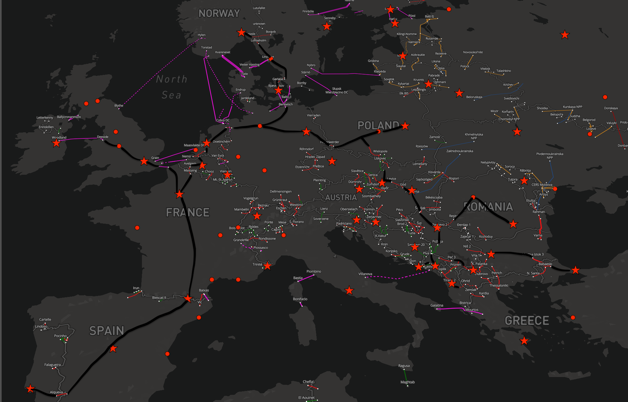
The estimated length of the first grid is about 7100km, directly passing through 28 cities. In the southeast, two large conversion stations will be built overall, while in the rest of the region, the conversion stations will be city-centric, and one will be shared by neighboring cities/islands. The total number of conversion stations required is 14, which does not exceed the premium range of one conversion station per 500km, so the calculation is carried out: ~99 billion euros in total. Since none of the areas are heavily traversed by mountains or newly built undersea tunnels, no additional price approval is required. About 20 countries are directly involved, and a total of about 30 countries can be helped, with a coverage rate of about 70%.
Route 3 stretches run through central Europe and north and south, allowing the substation to be extended to different parts of Europe.
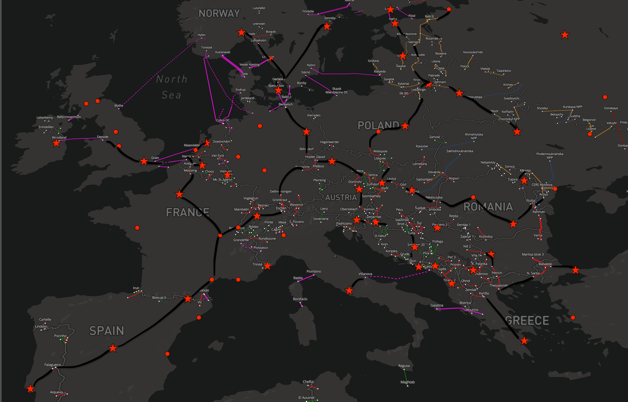
The length of the new line would be about 9,000km, covering 45 cities directly. According to the principle of building three large transformer systems in southeast Europe, Where the island shares one station with its neighboring city, the number of large exchange stations that need to be built is about 20. Each 450km station needs to be built, and distances less than 500km will incur a 10% premium. The total quotation will be ~137 billion euro. The premium has already been considered, so the extra money needed to build in the Swiss mountains does not need to be calculated again. Thirty-seven countries are directly or indirectly served, with 84 percent coverage.
Route four is a half loop route. It can be a full loop in the future.
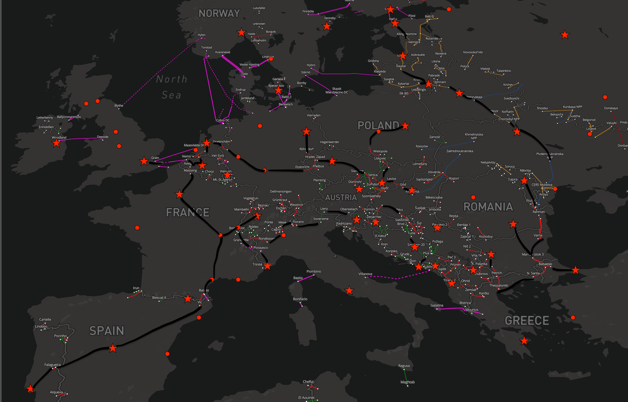
The line would require the construction of an ultra-high voltage direct current grid of about 7,500km, covering about 35 cities. Based on the principle of building one large exchange station in the nearest city, we need to build about 15 new exchange stations. In this case, our 500km spacing principle is not exceeded, so no 10% premium is required. So, the conclusion is that the price of the whole project will be around 104 billion Euros. Since the project is entirely in continental Europe, the number of countries covered is not very large, only 29. Coverage of about 66% is relatively low.
As for the modification of the existing power grid, it needs to decide based on which new power grid project operates. The cost is relatively small compared with the new power grid, so it will not get into detail here.
In total, the cost of the new grid is estimated at 200-300 billion euros, not including the refurbishment of the existing grid. Based on current electricity prices and usage in Europe, when the grid is fully plugged into service, the savings are estimated at around 50 million euros a year. Around 1,000 TWh of electricity is currently used in Europe each year, with electricity prices averaging 0.21 euros per kWh. Depending on the continued development of clean energy and the connection of new grids, the price could fall to around 0.12 euros per kWh. The environmental advantages brought by clean energy are incalculable, which is the main reason for the development of SuperGrid.
· Maintenance and Environmental Cost
As the power grid is a super project at the national/regional level the operator and the builder are not the same company as the highway, railway, aviation, etc. The construction costs are not directly distributed into the operation, so the operation and construction of the grid are two separate parts. As the SuperGrid is built using the latest technology, intelligent detection equipment will reduce operational difficulties during later maintenance. All data between pylons and power lines will be aggregated through smart grid terminals, greatly reducing the difficulty and cost of manual line inspection. At the same time, UAV and other equipment can be used instead of the original manual foot inspection, which can quickly check the lines in remote areas and rugged terrain areas. In general, as technology advances, the operating cost of the grid will fall, and the operating efficiency will increase.
European human and environmental considerations in the construction process go far beyond a few options. Each section needs to consider whether the villages and natural environment will affect the survival of local people and creatures. Today, the high-voltage grid is a very mature technology, and there will be no injuries due to technical faults. However, the SuperGrid will still consider many factors and control the variables to the minimum.
Power Stations
A stable source of clean electricity is the prerequisite for a SuperGrid to be an efficient transmitter rather than an ornament. The first phase of the development of the SuperGrid aims to use the abundant solar and wind energy from North Africa to continuously supply a large amount of electricity to the SuperGrid through solar thermal, photovoltaic, and wind farms. At the same time, the possibility of introducing several cheap clean energy sources in the future, such as geothermal energy from Northern Europe, tidal and wind energy from the ocean, solar energy from the Middle East, wind power, hydropower, photovoltaic and solar heat from China, is preserved. The scale of the SuperGrid is currently covering major cities in continental Europe, but the possibility of greater development is reserved for the future development of the UK, four Northern European countries, Russia, the Middle East, and North Africa. Europe, West Asia, and North Africa have the largest population and the highest energy use density in the world except East Asia. Around the Mediterranean, more than 70 countries need stable clean energy. The potential for future SuperGrid is not just to cover the European continent, but all densely populated areas centered around the Mediterranean.
For now, SuperGrid only serves major countries and cities in continental Europe because it is not possible to plan a world-class project from the outset that is super large and requires huge start-up capital. North Africa will be the sole energy supplier for the first phase to simplify the one-way demand for high-intensity UHVDC transmission lines during construction.
For clean energy use in North Africa, three North African countries will participate. Algeria is a major producer of clean energy. Algeria has a vast no man’s land area, which is poor in vegetation and species diversity. When a clean energy power plant is built, it will not affect the environment by occupying a large amount of land. Southern and central Algeria has some of the world’s highest levels of sun exposure, as well as significant wind power potential. Morocco and Tunisia will be an important part of the transmission route, and they will also enjoy the clean energy and stable power provided by SuperGrid. After being aggregated and converted into ultra-high voltage direct current, the electricity generated from Algeria will be sent east and west to Morocco and Tunisia, respectively. From Morocco, the line travels north through an undersea ultra-high voltage cable in the Strait of Giustra into Spain, where it connects to Europe’s SuperGrid. The Tunisian route would travel all the way northwest, via an undersea cable to Sicily, Italy. At Sicily, the route splits into two directions, one heading towards mainland Italy and into central Europe, and the other re-entering the Adriatic Sea and via undersea cables into eastern Europe. The clean energy from Algeria will now flow to Europe through three inputs via ultra-high-voltage dc lines, serving the entire continent.
Solar thermal power generation refers to the use of a large-scale array of parabolic or disk mirrors to collect solar heat, through the heat exchange device to provide steam, combined with the traditional steam turbine generator process, to achieve the purpose of power generation. The use of solar thermal power generation technology can greatly reduce the cost of solar power generation, avoiding the expensive silicon crystal photoelectric conversion process. Moreover, this form of solar energy has an advantage over other forms of solar conversion, which is that the water it burns can be stored in huge containers and still run steam turbines for hours after the sun goes down. The hot melt salt used in tower solar thermal power generation can even generate electricity 24 hours a day. Solar thermal power generation covers a large area and generates a large amount of electricity, but it is also more difficult to build and needs to be adjusted according to the terrain.
Photovoltaic power generation is a technology that converts light energy directly into electric energy by using the photovoltaic effect of the semiconductor interface. It is mainly composed of solar panels (components), controllers, and inverters, and the main components are composed of electronic components. After the solar cell is encapsulated and protected in series, it can form a large area of solar cell module, and then with the power controller and other components, the photovoltaic power generation device is formed. However, the production of solar panels has the characteristics of high pollution, high energy consumption, the production of solar panels requires very high energy and pollution is difficult to naturally digest.
Wind power is the conversion of the kinetic energy of the wind into electricity. Wind energy is a kind of clean and pollution-free renewable energy. It has been used for a long time, mainly to pump water and grind surfaces through windmills. People are interested in how to use the wind to generate electricity. The use of wind power generation is very environmentally friendly, and the amount of wind energy is huge, so it is increasingly valued by countries all over the world. Wind turbine because the air volume is not stable, so its output is 13 ~ 25V change of alternating current, must be rectified by the charger, and then charge the storage battery so that the energy generated by the wind generator into chemical energy. Then use the inverter power supply with the protection circuit, the chemical energy in the battery into AC 220V mains, to ensure stable use. Large wind farms, which can be adjusted to high-rated voltages for uniform collection and delivery, are as good users of UHVDC as solar photovoltaics.
In the future, as SuperGrid projects continue to expand and develop, more types of power generation may be connected to the grid. Hydroelectric power generation: the science and technology of studying technical and economic problems such as engineering construction, production, and operation of converting water energy into electric energy. Water energy used in hydropower generation is mainly potential energy contained in water bodies. To realize the conversion of water energy into electricity, different types of hydropower stations need to be built. The principle of tidal power generation is like that of ordinary hydraulic power generation. By leaving a reservoir, seawater is stored in the reservoir in the form of potential energy when the tide rises. Then, seawater is released when the tide falls. The technologies used in geothermal power generation include dry steam power plants, flash steam power plants, and binary cycle power plants. Currently, 24 countries use geothermal energy for electricity and 70 for heating. But because the energy is scattered and the power generation is unstable, the power of the enemy is currently lacking.
Since SuperGrid is not tied to a fixed source of clean energy, any of the above could be used to generate electricity in power stations. Currently, the three most reliable, most powerful, and closest options are using North African sources of electricity. In addition to being built to leave open the possibility of future expansion in multiple directions, the current SuperGrid project will be developed with north Africa as the sole source of supply.
Corporation and Companies
The scale of the SuperGrid project is too large to be completed by one company or one country. Among the companies that need and do, there are some very important companies. They not only master the related technology of UHVDC, but also have a rich network of contacts, and at the same time, they control the right to operate the electric energy in many European countries. There are other companies that are not in Europe but are leaders in the industry and have plans to build similar grids in other parts of the world. Details of these companies and their role in the SuperGrid project are described below.
1. ABB
ABB is a leading manufacturer of power and automation technologies. ABB invented and manufactured many products and technologies, including the world’s first three-phase power transmission system, the world’s first self-cooling transformer, high-voltage direct-current power transmission technology, and the first electric industrial robot, and pioneered their commercial application. ABB has a wide range of product lines, including the full range of power transformers and distribution transformers, high, medium, and low voltage switchgear products, ac, and dc transmission and distribution system, electric power automation system, all kinds of measuring devices, and sensors, real-time control and optimization system, high efficiency and energy saving of motor and driving system, power quality, transformation, and synchronization system, Fuses, and switchgear that protect the safety of power systems. These products have been widely used in industry, commerce, power, and public utilities. ABB Group has been one of the top 500 companies in the world for more than 24 years. Its business has been growing steadily and progressing with The Times.
For the SuperGrid project, the cooperation with ABB is mainly in their five business units, Power Systems, and Power Products. Power Systems provides a full range of systems and services for transmission and distribution networks and power plants around the world, with an emphasis on substations and substation automatic control systems. In addition, the division provides flexible ac transmission systems and high voltage direct current transmission systems as well as grid management systems. In the power generation business, the Power Systems Division provides instrumentation products as well as plant control and auxiliary equipment. Electric power product is an important part of power transmission and distribution engineering. The division will lead ABB’s transformers, switches, circuit breakers, cables, and ancillary equipment manufacturing operations around the world. In addition, it provides related services to improve product performance and extend the product life cycle.
In December 2018, ABB and Hitachi Ltd announced that Hitachi would acquire ABB’s power grid business for approximately $6.4 billion. But in substations, high-voltage, and ultra-high-voltage grids, ABB still has cutting-edge technology. Since 1965, ABB has mastered the world’s leading technology in substation and substation automation systems, flexible ac transmission systems, high voltage dc systems, and network management systems. ABB is present in all high-voltage grid projects from Canada to Brazil, the West Coast of the United States, China, and India. In 2020, ABB will join hands with Hitachi in the HVDC system sector in India. Since 2010, ABB has worked closely with ABB on UHV DC and AC power grids, and until 2020, ABB has participated in the construction of almost every substation in China’s UHV power grids. With ABB’s technical support, China’s ultra-high voltage power grid can continue to develop. ABB’s Power Grid Division recently signed an agreement with the State Grid Corporation of China to provide advanced HVDC converter transformers and high-voltage equipment for three ±800kV UHVDC transmission projects in 2020 to help bring hydroelectrically, wind, and photovoltaic power generation together while reducing carbon dioxide emissions.
ABB supplied power products with breakthrough technology for the world’s first ±1100 kV UHVDC project in China. The Changji-Guquan UHV DC project, which will transfer power from Xinjiang in Northwest China to Anhui in East China, has set a new world record in terms of voltage level, transmission capacity, and transmission distance. The line has a transmission capacity of 12 GW, equivalent to the output of 12 large power plants. The same technology could be used on the big North Africa-Europe link line. ABB’s proven UHV technology not only reduces construction costs but also makes many of the project’s ideas possible. At the same time, ABB is developing the miniaturization of the HVDC substation system, which makes one of the biggest defects of DC power effectively remedy and greatly increases the convenience of the implementation of the SuperGrid project.
ABB is also doing well in underwater cables. The Su-Tong Gil Tunnel runs under the Yangtze River and is the world’s first ultra-high-pressure tunnel crossing the river. The tunnel is 5.7 kilometers long and reaches a depth of 75 meters under the Yangtze River. In this project, ABB was responsible for the design, supply, and installation of the 1000 kV GIL provided. ABB’s solutions will enable maximum transmission capacity and minimum transmission losses, contribute to the energy security of the East China UHV grid, and support economic and social development.
Conclusion: ABB is the main member of the SuperGrid project responsible for the construction of the ultra-high voltage grid, providing technical support and personnel deployment for the SuperGrid. ABB is also the current industry leader in terms of experience and has a wealth of practical operational experience.
2. GE Grid Solutions
Grid Solutions is GE’s renewable energy business, with more than 13,000 employees serving customers worldwide. Grid Solutions provides power utilities and the global industry with equipment, systems, and services to bring power reliably and efficiently from the point of generation to the end power consumer. Grid Solutions addresses the challenges of the energy transition by connecting renewable and distributed energy sources safely and reliably to the grid.
GE Grid Solutions has evolved through several changes. For the most part, it was part of GE’s Industrial Solutions business. In 2014, GE and Alstom set up a new joint venture, which transferred the renewable energy, nuclear power, and transmission businesses of the two companies to the new company and combined with Alstom’s deep-rooted electrical strengths in France and Europe to expand GE’s business in Europe. And GE’s advanced technology in gas turbines, substations, and power grids can be used in Europe. But Alstom eventually decided to sell its energy division, and its electricity-focused business was acquired by GE in 2015 for $17 billion. GE Grid Solutions is officially available worldwide. The acquisition completes the merger of GE’s European energy business and Alstom’s global power business.
In late 2017, after signing a $15 billion deal with Saudi Arabia, GE’s main unit sold its industrial solutions business, including its power grid solutions, to ABB. The $2.6 billion deal offers significant value creation potential for ABB, including growth opportunities to be exploited by combining ABB’s digital offerings, ABB Ability™, with its extensive GEIS installed base. The merger solidifies ABB’s position as a global leader in electrification and accelerates growth and competitiveness in key markets, particularly North America. The product portfolios of GE Industrial Solutions and ABB are highly complementary. The merger is not a sale of GE’s electrification ownership, but a combination of parts of the solution and ABB’s strong infrastructure technology.
GEIS will be integrated into ABB’s Electrified Products (EP) division, led by EP President Tarak Mehta, as a new business unit called Electrified Products Industrial Solutions (EPIS). Tarak Mehta said. “We are committed to serving our GEIS installation base and will now be able to deliver more technologically advanced and digitally connected products to our customers worldwide. Together, we will strengthen ABB’s position as the world’s second-largest in electrification and expand our access to the attractive North American market.”
Since State Grid is the absolute leader in the field of electrification in the world, its internal circulation and volume cannot be matched by any other company. Therefore, with the merger of GE Grid Solution and ABB Electric, ABB will firmly control the title of the second-largest electrification enterprise in the world, with the business carried out all over the world and close cooperation with China.
Since State Grid is the absolute leader in the field of electrification in the world, its internal circulation and volume cannot be matched by any other company. Therefore, with the merger of GE Grid Solution and ABB Electric, ABB will firmly control the title of the second-largest electrification enterprise in the world, with the business carried out all over the world and close cooperation with China. GE Grid Solutions is now not a separate business company, but part of ABB. So, the same services that ABB can provide to SuperGrid can also be provided by GE Grid Solution. And now that Alstom’s European electrical business has been sold to General Electric, GE Grid Solutions is in a better position to persuade France, a country that continues to support nuclear power rather than clean energy grids, to join the SuperGrid.
Conclusion:
GE Grid Solution is now part of ABB’s main business, owning the rights to Euro electric, which it bought from Alstom. GE Grid Solution can make SuperGrid cover more countries and regions and build a better “smart Grid”. GE Grid Solution is also the only way to persuade nuclear power champions such as France to join the SuperGrid project.
3. Hitachi
Hitachi is one of the world’s top 500 enterprises, involving many fields. Business sectors include energy systems, transportation systems such as railways that enable people to travel safely and comfortably, information systems that use big data to innovate, and healthcare that provides healthy living through health management, diagnostics, and medical technology. As a global leader in social innovation, Hitachi engages in the fields of power, energy, industry, circulation, water, urban construction, finance, public, and health care, providing quality solutions through collaboration with customers. China is one of the most important markets for Hitachi, and Hitachi has close cooperation with Japan, Europe, and the United Kingdom. Like GE in the medium term, Hitachi is an integrated company that spans many different areas of technology.
For the SuperGrid project, Hitachi has the world’s top material science and power system research. Hitachi has been building nuclear power plants, power grids, and substations for the Tokyo Electric Power Company since 1975. Hitachi is a world leader in cable and specialty steel, providing high voltage cables and related services to many countries and regions. At the same time, Hitachi independently develops nuclear power, hydrogen power, and other energy sources, making outstanding contributions to carbon neutrality.
In 2018, Hitachi acquired ABB’s power grid business for the US $6.4 billion, marking Hitachi’s gradual shift from nuclear power to clean energy-ultra-high voltage power grids in the power industry. Japan signed a partnership agreement with ABB in 2010 to develop a new generation of UHVDC power grids for India. Today, Hitachi ABB Power Grid is the second largest UHV grid company in Asia, providing ±1100kV UHV DC transformer and transmission lines.
Hitachi built the world’s first operational ±1100kV UHVDC power line in 1999 with Tokyo Electric Power Company (TEPCO). Although the actual operating voltage of the project is ±500kV due to the low actual transportation demand and the shutdown of the nuclear power plant, this line is still the earliest ultra-high-voltage DC line in the world. Hitachi has the relevant mature construction experience and practical operation experience that can provide technical support for the construction and operation of the super grid. The combination of ABB and Hitachi makes Hitachi one of the best choices for grid manufacturers and designers in super grid projects. Hitachi can serve the project with proven technology to make the construction of the SuperGrid smoother while avoiding the problems that have occurred with the construction of ultra-high voltage direct current transmission lines in Japan.
With the gradual development of the UHVDC cooperation project in India, Hitachi and ABB will have a more familiar way of cooperation, which will also play a solid foundation for the future use of the two sides to cooperate in the construction of the super grid. Currently, in addition to China’s State Grid, only Hitachi ABB Power Grid has relevant construction experience. For some political reasons, Hitachi ABB Power Grid would be our best choice.
Conclusion:
Hitachi is one of the leaders in Asia’s UHVDC grid, second only to SGCC* in China. Hitachi is currently working with ABB on the UHVDC network in India, so it can be a good partner.
4. Siemens
Founded in 1847, Siemens AG is a global leader in the field of electrical and electronic engineering. Siemens and GE have grown in similar ways, but one is based in America and the other in Germany. Siemens’s Asian and European businesses grew before GE did, and it is also moving from making energy feedstocks to electrifying them. Siemens’ original HVDC transmission lines in Europe have been unexplored, but Siemens has shown China the great potential of HVDC transmission lines for long-distance transmission. In 1984, Siemens built China’s first high-voltage direct current transmission line. The line would have carried 1,200 megawatts of power from the Gezhouba hydropower station, then China’s largest hydropower station, in the middle reaches of the Yangtze River, to Shanghai, thousands of miles away. Completed in 1989, the project marks Siemens’ significant contribution to the transmission of HVDC power in China, as well as demonstrating Siemens’ expertise in installing high-tech equipment and the reliability of its products.
In 1985, Siemens acquired Allis-Chalmers’ interest in the partnership company Siemens-Allis (founded in 1978), which provided electrical control equipment. It is merged into Siemens’ energy and automation divisions. This has given Siemens further strength in electrical. In 1998, Siemens acquired Westinghouse Power from CBS Corporation for more than $1.5 billion, elevating Siemens from third to second place in the world power generation market. Siemens abandoned the solar photovoltaic business in 2002 by selling to Shell its stake in a joint venture it had formed with Shell and E. ON in 2001. In 2004, Bonus Energy, a wind energy company based in Brand, Denmark, was acquired to form Siemens’ wind power division.
From 2004 to 2009, Siemens acquired a series of companies and invested in venture capital firms to build a presence in solar thermal power generation. In September 2011, Siemens, which builds Germany’s 17 existing nuclear power plants, announced it was pulling out of the nuclear power sector in the wake of the Fukushima disaster and subsequent changes in Germany’s energy policy. CEO Peter Loscher backed the German government’s planned Evergreened, a transition to renewable energy technologies. In 2014, with the rapid expansion of wind power in the UK, Siemens announced plans to build the US $264 million offshore wind turbine manufacturing plant in Paul, UK. In June 2014, Siemens and Mitsubishi Heavy Industries announced a joint venture to bid for Alstom’s troubled energy and transportation businesses but lost to GE.
Siemens currently has its technology and control in clean energy production, and with its knowledge of the UHV grid, Siemens will play an important role in the super grid. Siemens can take advantage of existing clean energy resources in North Africa, convert them into electricity and deliver it to Europe. While Siemens is not the only choice for clean energy production, it is one of the largest companies to integrate all those with the capacity to build clean energy power plants in North Africa.
5. Mitsubishi Electric Corporation
Mitsubishi Electric Corporation was founded on January 15, 1921, is a Japanese multinational electronic and electrical equipment manufacturing company, headquartered in Tokyo, Japan. Mitsubishi Electric is Japan’s second-largest electrification company after Hitachi. Mitsubishi also ranks among the world’s top 500 companies. Unlike Hitachi, Mitsubishi’s main corporate structure is looser, with Mitsubishi Electric Corporation as the main component of the company. Mitsubishi Electric Corporation has a wide range of products, including display products for individual consumers, mobile phones, kitchen electrical, vehicle electrical, household electrical, and air conditioning electrical. Business consumer-oriented electronics, power, social, transportation, space, information, electrical, machinery, semiconductor, and imaging, etc. Mitsubishi Electric has long established a global network of companies, research institutions, and production, providing technical information and materials to business departments, which play an important role in the process of creating first-class products for each department. Mitsubishi electric in keeping the company in the industry and heavy electrical equipment, satellite, defense system, elevator and escalator, automobile electronics, air conditioning, ventilation and other fields, the leading position at the same time, also will further expand in the mobile communication device, display device, display device technology, and cutting-edge semiconductor market share in the areas of the world. In addition, Mitsubishi will be committed to expanding into new business areas, especially in the areas of environmental protection and water purification success.
Mitsubishi Electric Corporation is world-famous for its electric motors and most of its products are derivatives of electric motors. Mitsubishi AC asynchronous motors are a series of high efficiency, small size, and many varieties of AC motors, serving all walks of life. At the same time, Mitsubishi Electric Corporation has also developed a direct current motor for power trains. The Beijing Capital Airport Express uses Mitsubishi DC motors.
Currently, Mitsubishi is not particularly successful in the UHVDC network, but Mitsubishi electric co., LTD is at the forefront of the use of dc in the world. Unfortunately, at the end of June this year, a huge scandal broke out in Mitsubishi Electric Corporation. Mitsubishi Electric Co., Ltd. has been reporting fake quality data to customers since the 1980s to get through the inspection of air conditioners on trains supplied to domestic railway companies, the Nikkei reported. Takeshi Sugiyama resigned as president of Japan’s Mitsubishi Electric. This is a huge blow to the Mitsubishi Group and a disappointment to customers who have long trusted Mitsubishi Electric. Maybe in the future, when the super grid needs to use DC motors in its substations, it will need to cooperate with Mitsubishi Electric Corporation at various levels, but at present, there is no need for them in the project.
Conclusion:
Siemens is a leader in clean energy and an essential part of clean energy development in North Africa. ABB and Siemens are leading the way in grid projects and clean farms, which could quickly create a SuperGrid.
Issues
The idea of a SuperGrid is huge and it creates a lot of difficulties in construction and application. Financial problems, technical problems, partners, concrete implementation will bring a lot of difficulties. In the last decade, many clean energy companies led by Med grid and Desertec have encountered many difficulties in the process of carrying out projects, leading to project stagnation. Due to a drop in demand and a shift in focus due to the pandemic, no clean power or SuperGrid projects have yet been built in North Africa, and only the UK’s offshore wind farms are well under way in Europe. Siemens provided technical support to the UK. The following will be analyzed according to some practical problems, where the difficulties appear and how to solve them at present.
1. Using clean power from North Africa, about how many parallel transmission lines would be needed to meet more than 75 percent of European demand with current UHVDC technology?
The problem is very practical. Since north Africa is connected to Europe via an UHVDC submarine cable, the project is difficult to expand. It is best to plan at the time of construction, survey the seabed and leave enough space for access. The problem of submarine cable transmission is that the current HVDC transmission line is generally 220kV, compared with the assumption of 1100kV UHVDC submarine cable is far from. Current undersea transmission cables are mainly continent-peninsula or island-island connections and therefore are not very large for power overload. Take the link between China’s Fujian province and Kinmen Island as an example. At present, the submarine cable only supplies electricity to 10 watts of people. There are few undersea cables to power hundreds of millions of people in the world, and the technology for undersea UHVDC cables is not mature. So, this is a very interesting question.
2. What is the approximate footprint of an UHVDC substation for a medium-sized city (population 0.5~1 million)? Will it occupy many urban land resources?
As mentioned in the previous planning, one of the drawbacks of the UHVDC grid is that the substation is more expensive and occupies a larger area. In general, a medium-sized city with a very large substation is sufficient to serve the city’s electricity use (except for backup). Understanding the footprint of the UHV DC substation can better control the cost of land use. If the area is too large, it will have to follow the plan to build substations between densely populated areas and then connect cities with ultra-high voltage alternating current. The area of the UHVDC substation directly affects the layout and service object of the UHVDC transmission line. At the same time, this has created a difficult project cost control. If UHVDC substations have a similar footprint to traditional HVDC substations, the UHVDC grid can be scaled to medium-sized Phuket cities, rather than serving only large metropolitan areas.
3. Would connecting the whole of Europe lead to massive blackouts? Are they more vulnerable to terrorist attacks than countries running their own power grids?
Today’s power grid is the focus of terrorist attacks. Once a city loses its power, it loses its ability to connect with the outside world. This would cause mass panic and test a city’s emergency response more than any other terrorist attack. The UHVDC grid can bring a lot of clean energy, but it also centralizes power and connects more areas. When multiple cities are connected by the same super-large substation, this can lead to an attack on one substation affecting multiple cities. This is the hidden danger that SuperGrid may bring to power security, which needs to be discussed and decided.
4. How is the approval of high voltage in Europe carried out? Are there many areas to be careful of/avoid when setting up a high voltage grid? Will this affect the economics of the SuperGrid?
Choosing the construction channel of UHVDC grid is another difficult problem in addition to the location of substations. Unlike China, where the population is unevenly spread, Europe’s population is dense and evenly spread, with cities and villages dotted throughout every region of the continent. Most of China’s UHVDC power grids run through uninhabited mountains and plains, and few are shunned because they need to travel through cities or populated areas. At the same time China nationalized land, SGCC* is also nationalized company.
State-led projects built directly would be much simpler. Unlike Europe, the EU does not have the ability to manage countries, so it still needs to decide according to the policies of each country for high-voltage power grid. Meanwhile, the high-density privatized land makes the arrangement and construction of high-voltage pylorus full of challenges. For high-voltage lines, straight-line distances can effectively reduce costs (pylons have a strong vertical climb capability, so terrain issues can be largely ignored). The purpose of SuperGrid is to improve the competition between clean energy and existing traditional energy by reducing the cost of electricity. Too much investment in the construction of the grid may lead to a decline in economic competitiveness. So, this is also a problem that needs to be solved.
5. Is a new grid necessary for short distance connections within Europe? Could it be possible to reduce costs by simply building a single transport route linking North Africa to multiple European regions?
In Europe, the distance between countries and cities is very short, which makes it impossible to give full play to the advantages of UHVDC grid. Connecting all the countries of Europe is a big project, and impractical. So, there is the question of whether a whole new SuperGrid system will need to be built within Europe. Since there is no UHV connection between North Africa and Europe, UHVDC from North Africa to Europe can carry more power and reduce losses. But would it be a better solution if we connected the UHVDC grid point-to-point, with several UHVDC transmission lines from North Africa to various power centers in Europe, and used the existing grid as much as possible to expand the range of electricity? That, too, is worth discussing.
6. How to balance the need for clean energy with the need for power development? How can this project be done without reducing each country’s ability to provide its own electricity?
Europe is a region of many countries, holding each other hostage and helping each other. But each country is still an individual. The construction and use of SuperGrid is bound to reduce domestic power supply and weaken energy development in individual countries. How to ensure that the development of SuperGrid will not completely outlaw the domestic self-energy guarantee capability is a problem that needs to be considered in the construction of SuperGrid and is also one of the main problems in the development of Europe.
7. How can Europe, as a multi-country region, coordinate projects to reach more people? How to solve the situation that some countries are committed to using nuclear power?
The first part of this question has been mentioned before, and the main analysis is the second part. Not all countries in Europe want to replace traditional energy with truly clean energy such as wind, hydro and solar. Set aside some countries that use less electricity. France, for example, wants to convert its electricity use to nuclear power and has already replaced many conventional coal-fired plants. France has by far the highest proportion of nuclear power generation in the world, and their excellent nuclear power capacity makes them less interested in projects such as the SuperGrid. The idea for a SuperGrid originated in Germany, and how to make it work for all of Europe remains an open question.
8. If the project is optimistic, could the SuperGrid make Europe’s electricity completely carbon neutral? Do we only have the option of a good clean power plant in North Africa? Or could other areas provide an excellent source of electricity?
Carbon neutrality is a phased goal. There are many developed countries in Europe, and the carbon peak of the whole Europe has been reached. Achieving carbon neutrality is a real thing. The existence of a SuperGrid is one of the best solutions to the goal of carbon neutrality. How to fully meet Europe’s demand for electricity from clean energy is a question that the SuperGrid has been studying all along. It is hoped that in the future, when the SuperGrid becomes real, it will become the main force of Europe’s electricity output and make a significant contribution to Europe’s goal of leading the world in carbon neutrality.
9. With such a high capital cost to build a SuperGrid, how can it be guaranteed that it will operate with lower clean energy costs in the future?
The aim of the SuperGrid is to deliver cheap, clean power from distant areas to densely populated areas while reducing transport waste and operating costs. The idea is to compete with conventional electricity, which is cheaper to transport. Therefore, in addition to increasing coverage, the design goal of SuperGrid is to reduce costs. Only lower construction costs can be competitive when depreciation costs are calculated in the future.
At the same time, it is hoped that the operation cost and construction cost can be separated during the operation process. As much as possible, a portion of the profit generated during operation should cover the construction cost, but as much as possible, do not amortize the construction cost into the operating cost. This will not only put great pressure on the operation of enterprises, but also raise the price of electricity, making the SuperGrid uncompetitive. This will be an important issue affecting the development of SuperGrid.
10. At present, China is the most mature country using UHVDC power grid in the world. India and Japan also have very clear construction plans for UHVDC projects. Can SuperGrid be built in cooperation with enterprises outside Europe (such as SGCC*)?
At present, the research objects are all the companies with major global business and business coverage in Europe. These companies either have the technology or the market share, but in fact have a certain degree of lack of experience in directly building UHVDC power grids.
The SuperGrid is a new type of project for Europe, so there will be a lot of problems. Many of the fundamental problems can be avoided and the construction process can be accelerated by partnering with a company that already has extensive construction experience. The only problem is that THE SGCC is currently limited by countries like the US to build in areas that require US technology, so the depth of cooperation needs to be considered. But now the relationship between the EU and China is good, and super projects like the super grid can be mutually beneficial to both sides, so it is a question worth thinking about.
SuperGrid pose problems because they are so large and spread across so many countries and regions. Once the SuperGrid starts to be built, there will still be a myriad of problems. It is hoped that designers, builders, and investors have a sincere heart to face the environmental problems of the earth, do not take economic interests as the first goal, and strive to build this super project.
*SGCC stands for State Grid Cooperation of China. The company takes investment, construction, and operation of power grid as its core business, and undertakes the basic mission of ensuring safe, economic, clean, and sustainable power supply. Currently in the international stable operation in the Philippines, Brazil, Portugal, Australia, Italy, Greece, China (Hong Kong) and other countries and regions of the assets. At present, it is the largest company in the power grid electric industry in the world and ranks among the top three of the total enterprises in the world.
Conclusion
The SuperGrid project is an outgrowth of Europe’s efforts to gradually achieve carbon neutrality within the next few decades. The goal of SuperGrid is to bring clean electricity from sparsely populated areas to densely populated areas in a way that reduces pollution and carbon emissions from electricity production. After nearly 10 years of planning and experiments, the SuperGrid is currently the best solution for the large-scale popularization of clean energy in Europe.
The first phase of the SuperGrid will serve most of continental Europe (excluding the Four Northern European countries) while serving parts of England and Scotland via the existing Anglo-French submarine cable. The first phase of the project, estimated at €200-300 billion, will include clean energy plants in North Africa, two UHVDC undersea cables, and dozens of necessary substations, as well as the overall intelligent renovation and connection of the existing HV grid. North Africa’s clean-energy plants, which generate electricity through wind, photovoltaic and thermal power, will need to meet 50% of the continent’s electricity needs annually. Two ultra-high voltage direct current (UHVDC) undersea cables linking Morocco to Spain and Tunisia to Italy will deliver electricity directly to the hinterlands of Western, Central, and Eastern Europe. When the power is added to the existing power grid through the new ultra-high-voltage DC converter, the intelligently upgraded high voltage grid will deliver clean power to cities and towns to meet people’s demand for electricity. Since clean energy plants require little sustained capital investment beyond maintenance after completion, plus the low loss and high-density transmission characteristics of UHVDC transmission systems, they can compete with traditional power generation methods at lower prices. SuperGrid is expected to cut electricity prices in Europe by half, making it more competitive with conventional energy.
As the coverage of the SuperGrid increases and the demand for electricity in Europe grows, clean energy such as tidal power and geothermal energy could be added to the SuperGrid, in addition to the three sources in North Africa. The continent doesn’t have a lot of potential for clean energy, but its northeastern islands have geothermal energy and a ring of ocean power. The abundant clean energy around combined with the advantages of the ultra-high voltage DC power grid can well break the problems such as the inability to store clean energy according to local conditions.
As a super project that aims to cover more than 50 countries and regions, SuperGrid is not a project that any single company or group can accomplish independently. Europe and the rest of the world are home to several strong companies in ultra-high voltage power grids, electrification, and clean energy production. Among them, ABB, GE Grid Solution, Hitachi, and Siemens of Germany can all become the cooperative companies and leading companies of super Grid projects. They have mastered the core technologies and markets in each stage and field of SuperGrid and have rich experience in UHVDC grid construction. A combination of these companies could effectively share the engineering difficulty of the SuperGrid, breaking it up into smaller pieces. Most of these companies have operations in or are Based in, Europe. These companies will take SuperGrid from fantasy to reality.
In addition to these companies, State Grid Cooperation of China (SGCC) is the only company in the world that has successfully built UHVDC Grid and UHV AC Grid to form a long-distance power transportation network. China is the technology leader and sets most of the standards for UHVDC power systems. In the design and construction phase of the super grid in Europe, we can cooperate with SGCC, learn from China’s experience, and reduce elementary mistakes caused by unfamiliarity with relative fields. At the same time, China is currently building the one BELT one Road UHVDC system, which could be one of the sources of cheap electricity in the future. Germany has shown in previous studies that importing electricity from China could lower the price of electricity to €0.12.
The SuperGrid could take 30 years to build, with complete completion around 2050. But SuperGrid can be built over time as investments are made. During this period, many difficulties may be encountered, whether technical, environmental, social, economic, or political. SuperGrid is still in the tentative stage but will not hinder the future SuperGrid after the completion of the enjoy. All these problems will be solved one by one in the future and solving environmental problems will be the main topic for the next 30 years. SuperGrid, as the most favorable solution to the carbon emission problem of electricity, will become the main soldier in the future carbon-neutral battlefield.